
Hotel Operations
Group Bookings: How to Organise Them More Effectively
A group can fill a hotel in a quiet period, but it can also create confusion if the information is not well organised. The rule is simple: anything not agreed and written down before arrival will turn into a question at the front desk at the busiest possible moment.
By RoomRack Editorial Team ·
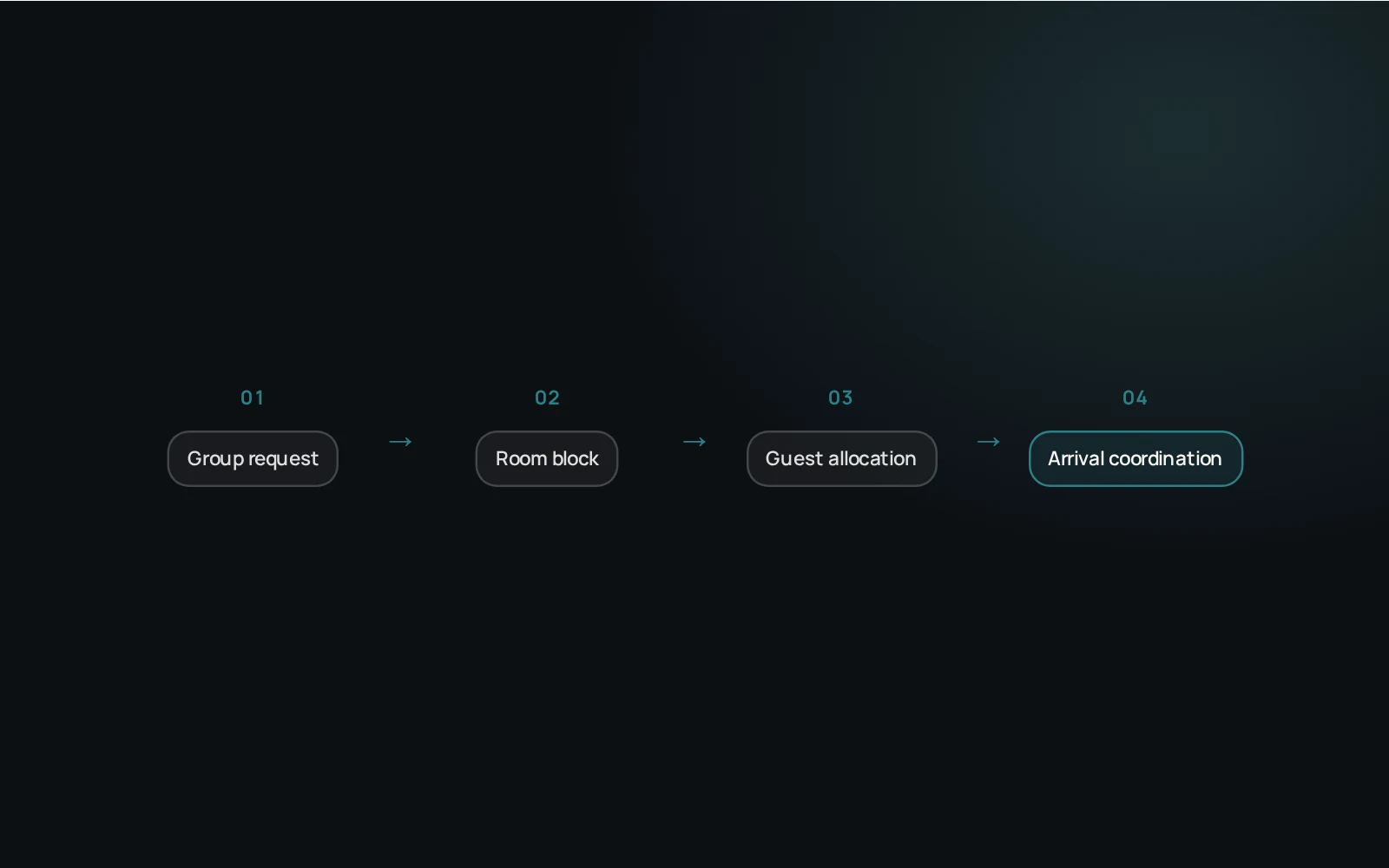
What to agree at the outset
- Arrival and departure dates, and whether everyone travels together.
- Room block: how many rooms, which types, and how long they are held.
- Release date: when unconfirmed rooms go back into general availability.
- Billing: what the organiser pays and what individual guests pay.
- Cancellation and deposit terms for the group.
- One named contact on each side.
Rooming lists and allocation
Rooming lists rarely arrive complete with the first confirmation. Set a deadline and a clear format: names, room sharing, special requirements. The earlier rooms are allocated, the easier it is for housekeeping and front office to prepare.
Billing without misunderstandings
Most group disputes are about the bill. Who pays for accommodation? Who pays for meals? Do minibar extras go to the organiser or the guest? This needs to be in writing, known to the front desk and visible on the reservation, so that check-out does not become a negotiation.
Communication and changes
Changes are almost certain: a name is swapped, someone arrives a day late, the group shrinks. Record every change with the date and who requested it, and confirm it in writing to the organiser. That avoids disagreements at the end.
Coordinating arrival
A group arrival puts real pressure on the front desk. It helps to have keys or cards ready in advance, details already checked and a confirmed arrival time. If not every room is ready, a place to wait and a clear time estimate make a big difference.
Operational notes for the whole team
Meal schedules, transfer times, dietary requirements and accessibility requests matter to front office, housekeeping, kitchen and maintenance alike. When these notes sit in one place that every department can see, the group is served consistently.
Practical guide
A practical checklist
- A written agreement covering dates, block, release, billing and terms.
- A deadline for the full rooming list and allocation.
- A clear split between organiser and guest charges.
- Every change logged and confirmed in writing.
- Shared operational notes for all departments.
The RoomRack perspective
A PMS that gives everyone a shared view of reservations, rooms and folios, such as RoomRack Cloud PMS, helps the team work from the same information. For specific group-handling capabilities, talk to our team so we can confirm what fits your property's needs.
Frequently asked questions
When should rooms in a block be released?
On a date agreed in writing at the outset, far enough ahead of arrival that the rooms can be resold.
How do we avoid billing disputes?
With a written agreement on what the organiser pays and what each guest pays, shared with the front desk before arrival.
What if the rooming list arrives late?
Include a deadline in the agreement and prepare what you can with the details available. Confirm any changes in writing once the list arrives.