
Guest Experience
Common Guest Complaints — and What Hotels Can Learn From Them
Every hotel receives complaints, however well it runs. What matters is how they are handled in the moment and whether the property learns from them. A complaint that keeps coming back is rarely a coincidence; it usually points to something in the process.
By RoomRack Editorial Team ·
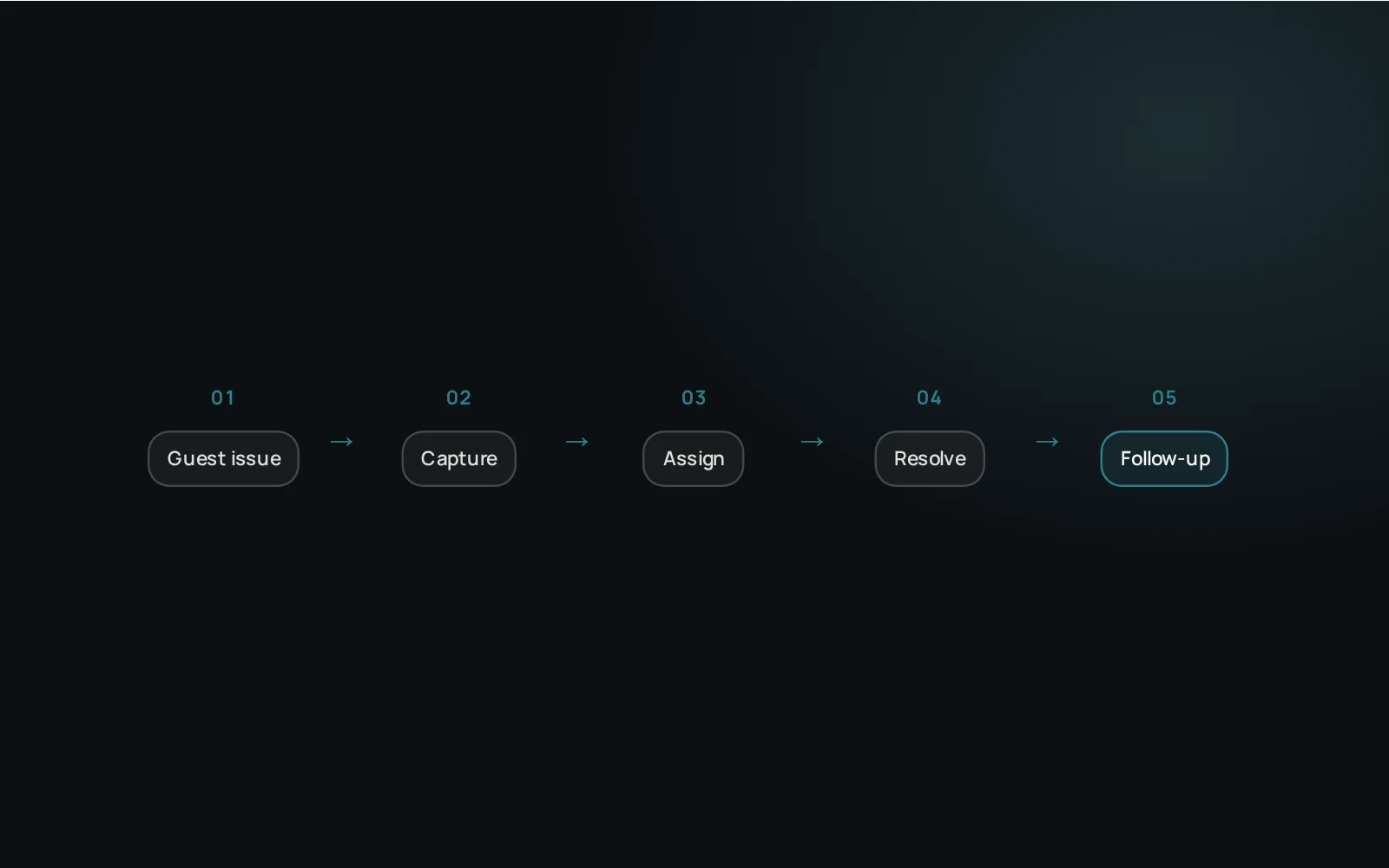
Four kinds of complaint
It helps to identify where a complaint comes from, because the fix is different in each case:
- Operational: the room was not ready, cleaning ran late, something was forgotten.
- Communication: the guest was not properly informed, or expected something different from what they understood.
- Physical: noise, air conditioning, insulation, ageing equipment.
- Service: tone, slow response, inconsistency between team members.
The issues that come up most
- Room readiness: arriving before cleaning is finished, or without a clear time.
- Cleanliness: missed details, especially in bathrooms.
- Noise: from the street, neighbouring rooms, the restaurant or plant equipment.
- Unclear information: opening hours, parking, breakfast, how to reach the property.
- Slow response: a request left unanswered or waiting for hours.
- Check-in friction: queues, or repeating details already provided.
- Billing misunderstandings: charges the guest did not expect or understand.
- Inconsistency: different answers to the same question from different people.
In the moment
Guests first want to be heard. A calm acknowledgement, a clear explanation of what will happen and by when, and confirmation once it is done achieve more than a hurried discount.
It also helps if staff know how far they can go on their own, such as moving a guest or offering a small gesture, and when to bring in a manager.
What technology can and cannot do
Technology helps mainly in two ways: it stops requests getting lost and it gets accurate information to guests quickly. A shared inbox makes open items visible. A digital assistant can answer practical questions or route a request to the right department.
It cannot fix a noisy room, and it does not replace the person who apologises and finds a solution. Handling a complaint remains human work.
Practical guide
From Complaint to Improvement
- Log every complaint in one place, with date, category and resolution.
- Review monthly which issues recur.
- Fix the cause: a process, a line on the website, a room inspection step.
- Tell the team what changed and why.
- Separate physical issues that need investment from operational ones you can fix now.
The RoomRack perspective
Unified Inbox brings guest messages together so open items and ownership are visible. AI Concierge can answer practical questions and route requests, with the team always able to step in. RoomRack Cloud PMS keeps notes and history on the reservation. These tools support complaint handling; they do not replace it.
Frequently asked questions
Should every complaint come with compensation?
No. A quick, sincere fix is often enough. Compensation makes sense when the guest was materially affected and a fix was not possible.
Can an AI tool handle complaints?
It can help log issues, share information and route them to the right department. Handling the complaint and deciding on the remedy should stay with the team.
How do we tell a one-off from a recurring problem?
Log complaints by category and review them monthly. Anything that keeps reappearing needs a fix at the source.