
Direct Revenue & Growth
Direct Booking or OTA? Building a Balanced Distribution Strategy
Distribution debates often end up as a binary choice: OTAs or direct bookings. In practice, most properties need both. The real question is what role each channel plays, and how you measure whether the balance is working for you.
By RoomRack Editorial Team ·
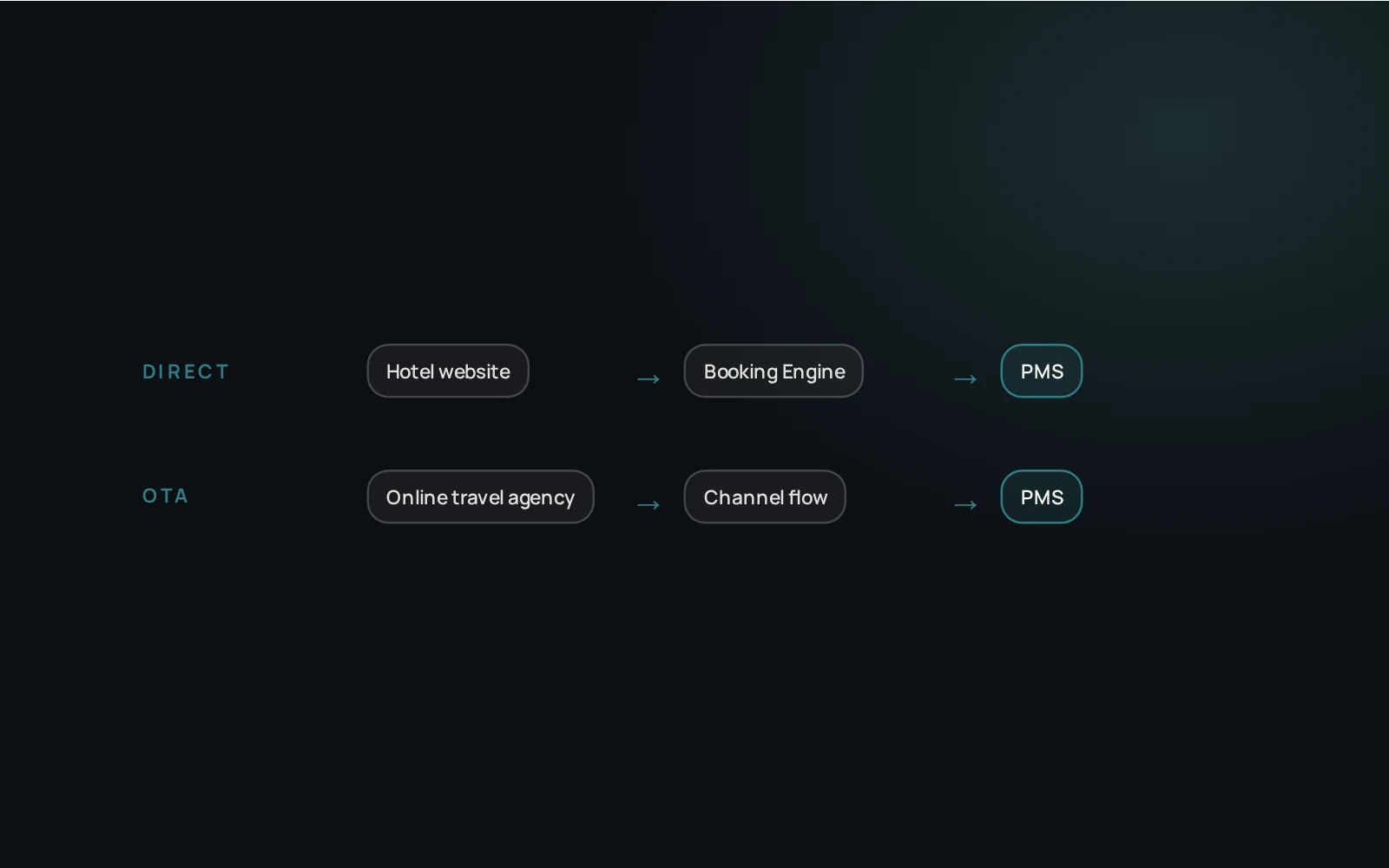
Different channels, different jobs
OTAs give visibility to travellers who might never otherwise discover the property. For many hotels — especially in new markets or low-demand periods — that visibility has real value. It also has a cost, both in commission and in how much of the guest relationship the hotel owns.
Direct channels, such as the hotel website and communication with past guests, offer more control over presentation, terms and the relationship. They require investment in visibility, booking experience and rate consistency. Neither is simply "good" or "bad".
Visibility and acquisition
Start with where guests discover you. If most new guests find you through OTAs, sharply reducing that presence can reduce demand before alternatives are in place. Balance is built gradually.
Conversion: the website booking experience
Many travellers visit a hotel's own website after finding it elsewhere. If the booking page is slow, awkward on mobile or unclear about rates, that visit often ends in a booking somewhere else. A simple, fast and honest booking flow frequently matters more than any discount.
Rate presentation
Guests compare. If the website shows a higher price than another channel, trust drops. Monitoring how your rates appear across channels helps you spot discrepancies early and correct them before they affect bookings.
Consistency does not have to mean identical rates everywhere. It can mean clear benefits for booking direct, such as flexible terms or a small extra, where this is compatible with the property's agreements.
Guest relationship and repeat business
The biggest value of direct channels is often not the first booking but the next one. A satisfied guest with an easy way to return directly is valuable. Post-stay communication and recognition for returning guests can help — with respect for consent and preferences.
Measurement: what to track
Balance should not be judged by feel. A few consistent indicators help: share of bookings by channel, net revenue after distribution costs, cancellation rate by source, length of stay and repeat bookings. What matters is the trend over time, not a single week.
Five elements of a balanced distribution strategy
There is no single right channel mix for every property. There are, however, five elements worth considering together, so that decisions do not rest on a single criterion.
- Acquisition: which channels bring guests who did not know you before? The channel that acquires new guests is not necessarily the one that keeps them.
- Conversion: how many of the people who find the property actually complete a booking, and where do they stop? The simplest improvements often sit here, from clearer terms to a faster page.
- Distribution cost: every channel has a cost — commission, advertising or the team's time. Comparisons only make sense when all of these are counted, not just the most visible one.
- Guest relationship: how much can you communicate with the guest before and after the stay, with their consent? That decides whether a first booking can become the start of a relationship.
- Repeat business: when a guest returns, which channel do they book through? If most return through the same channel that brought them the first time, an easy way to book direct may be missing.
Change gradually, and measure
When you decide to change something, it is better to change one element at a time and follow the result over a meaningful period. An improvement to the booking page, a change of terms or a new post-stay message can each be assessed on its own. That way you know what worked, rather than guessing.
Practical guide
What to review in your distribution strategy
- Do you know which channels bring new guests and which bring returning ones?
- How easy is it to book on your website from a phone?
- Are your rates presented consistently across channels?
- Does a guest have a clear reason to book direct?
- Do you measure net revenue per channel, not just booking volume?
- Is there a plan for communication after the stay?
The RoomRack perspective
Tools such as RoomRack Booking Engine for direct bookings, Channel Manager for distribution, and Rate Comparison and OTA Scanner for visibility of rates and availability can support this balance. The strategy itself remains each property's decision.
Frequently asked questions
Are direct bookings always more profitable?
Not always. The outcome depends on the cost of acquiring each guest, website conversion and the relationship built over time. That is why net revenue per channel is worth measuring.
Should I reduce my OTA presence?
Not necessarily. OTAs provide visibility that many properties value. Balance is usually built gradually, by strengthening direct channels.
What is the first step towards more direct bookings?
Usually a simple, fast booking page with clear rates and terms, especially on mobile.